Choose freezer bags when flexible portioning and freezer space matter most; choose glass containers when you want a reusable container that can also serve for reheating under its care instructions. For many batch-cooking routines, the useful choice is a small mix of both. Start with the portions you actually freeze and reheat, rather than buying the largest pack.
Deal alert: These deals can change at any time without notice! Prices, discounts, coupons, and availability may vary by location, account, size, color, or seller. The price shown was reported when the deal was found or published and is not guaranteed. Always verify the final price and promotion terms before checkout. Amazon prices, coupons, and Prime offers may vary by account.
Affiliate disclosure: GlitchNDealz may earn a commission from qualifying purchases through these links. As an Amazon Associate I earn from qualifying purchases.
Product details reviewed November 10, 2026. This is a source-based buying guide, not a hands-on test. Prices, sellers, variants and availability can change; check the selected listing before buying.
Freezer bags versus glass: compare the job first
| Choice | Verified selection | Useful for | Main limitation |
|---|---|---|---|
| Ziploc gallon freezer bags | 66 bags; stand-up bottom; ASIN B0DGN9C8QF | Flexible portions and packing around an uneven freezer layout | A bag is not a rigid serving dish. Follow bag-specific filling, cleaning and reheating directions. |
| Rubbermaid Brilliance glass set | Nine containers with nine lids: 18 pieces total; ASIN B08BR9HBZ3 | Repeated storage and reheating in the same appropriately sized base | The nine bases have different capacities; nine containers does not mean nine equal meal portions. |
When the 66-count Ziploc pack makes sense
The linked listing identifies gallon freezer bags with a stand-up bottom. Their flexible shape can be useful when you want to divide a larger batch into smaller portions; a gallon capacity does not mean every bag must hold a gallon. Before buying, check whether gallon bags fit your portion sizes or whether a smaller format you already own would be more practical.
Ziploc’s gallon freezer-bag overview describes freezer use, a stay-open design and a stand-up bottom. Those are manufacturer descriptions, not proof that a particular meal will keep longer than it would in glass. We have not compared leakage, freezer burn or freshness.
Check the 66-count Ziploc gallon freezer bags on Amazon.
What the nine-container Rubbermaid set actually includes
The selected Amazon listing describes three 1.3-cup, two 2-cup, two 3.2-cup, one 4.7-cup and one 8-cup glass container, each with a lid. That is nine storage containers and 18 pieces when lids are counted. Only two bases are 3.2 cups, so a shopper seeking six identical lunch portions should check a different capacity mix before ordering.
For this Brilliance glass selection, the listing describes freezer and dishwasher use, top-rack washing for lids, and microwave reheating with lids unlatched. Its glass bases are described as oven-safe up to 450°F; that rating applies to the bases, not the lids. The manufacturer’s Brilliance glass information also distinguishes the glass base from its plastic lid. Follow the instructions supplied with your exact model; do not transfer a rating from another Rubbermaid line.
Check the nine-container Rubbermaid Brilliance glass set on Amazon.
Compare cost per useful portion, not bags against lids
For bags, divide your delivered pack cost by the number of bags you expect to use. For glass, divide the delivered set cost by the number of bases that fit your usual portions, then consider how often you realistically reuse them. A low price per “piece” can mislead when half the pieces are lids.
Hypothetical example, not current product prices: suppose a bag pack costs $12 for 60 bags. At one bag per portion, packaging costs 20¢ per portion. Suppose a glass set costs $36 and has six bases that all fit your meals. That is $6 per usable base. After 30 uses per base, the purchase cost averages 20¢ per use, before washing, energy, replacement or loss. This illustration does not predict the lifespan or break-even point of either linked product.
The general calculation is: glass purchase cost ÷ usable bases ÷ uses per base. Compare that with bag-pack cost ÷ usable bags. Add your own cleaning and replacement costs when they matter. If you already own suitable containers, buying nothing may beat either new purchase.
Check these practical details before ordering
- Portion fit: write down your usual serving size and count only the bases or bags you will use.
- Freezer fit: measure the drawer and allow for lids and the filled container’s shape. An empty product dimension is not a promise that a full week of meals will fit.
- Reheating routine: decide whether you want to transfer food to another dish. Check the exact product’s directions before microwave or oven use.
- Care: Ziploc cautions users to let hot food cool before bagging. Its FAQ limits ordinary bag microwave use to defrosting or reheating with venting and distinguishes these bags from its silicone sous-vide products. Follow food-handling guidance separately; a storage product is not a cooking instruction.
Our selection method and recommendation
GlitchNDealz compared two existing, identifiable Amazon selections using their current product descriptions and relevant manufacturer instructions on November 10. We chose them to explain flexible freezer storage versus reusable glass, not to name a cheapest product, verified deal or tested performance winner. We did not test checkout, durability or food preservation, and do not claim a coupon, subscription discount or guaranteed stock.
For occasional bulk portions, start with the flexible format if it matches your routine. For repeated storage and reheating, count the glass bases that genuinely fit before comparing cost. Use both only if each solves a real task. For more comparisons, visit Amazon buying guides and deals and Household Essentials.
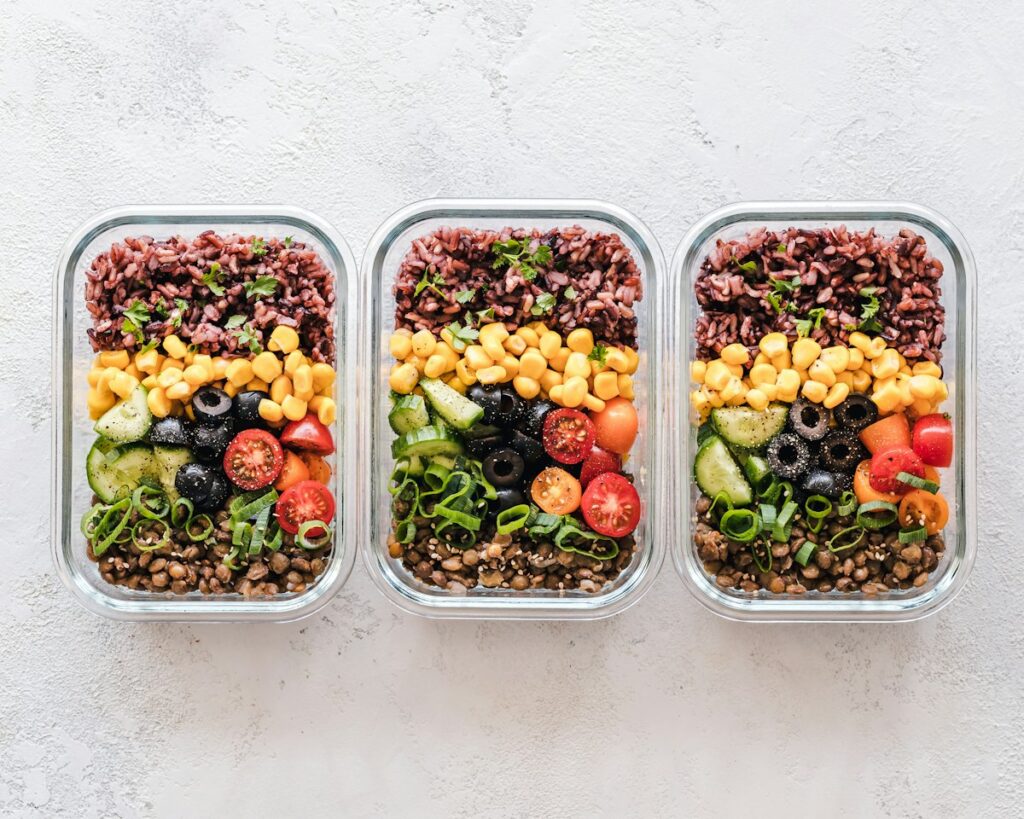
Illustrative meal-prep photo by Ella Olsson / Unsplash. It does not show the exact products compared.