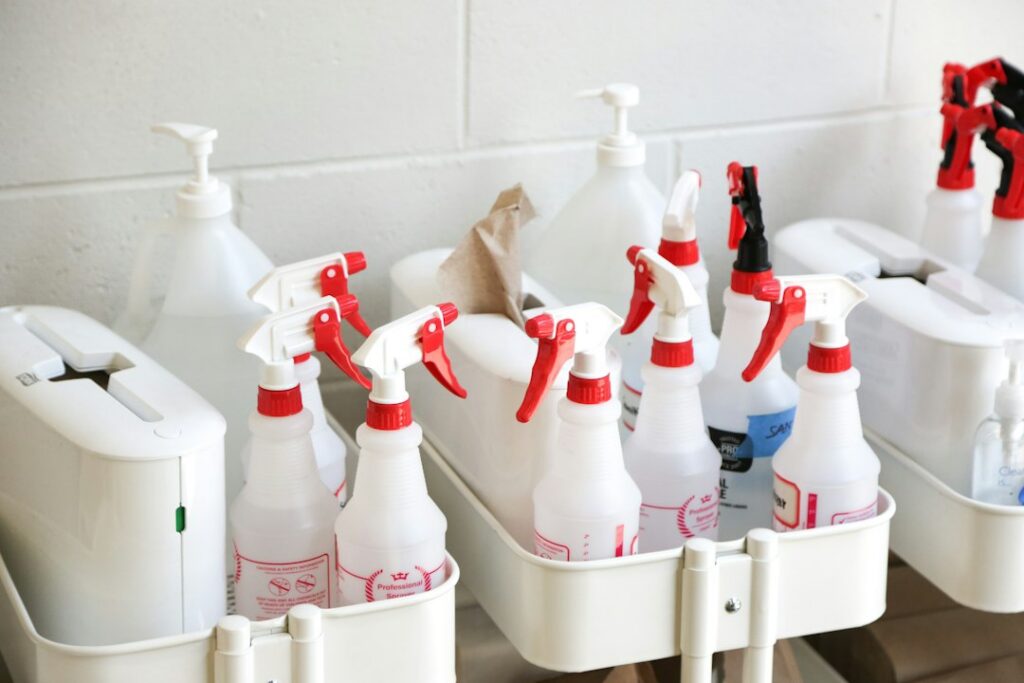
Cleaning supplies are everyday essentials, but a stock-up plan should include safe storage and use—not just a full cabinet. This checklist helps you organize common cleaners without mixing products or creating avoidable waste.
Keep products in their original containers
Leave cleaning products in their original, labeled containers and follow the directions on each label. Do not transfer a cleaner into a food or drink container. Store bleach and other hypochlorite products up, away, and out of sight of children, and keep lids secured.
Never mix cleaners
Do not mix household cleaning products. In particular, bleach should not be mixed with ammonia or acids such as some toilet-bowl cleaners or vinegar. These combinations can create hazardous fumes. Use one product as directed, ventilate the space, and give the area time to air out as appropriate.
Build a practical restock list
Instead of buying several products with overlapping uses, list the surfaces and tasks in your home: dishes, laundry, bathroom, floors, glass, and any disinfecting needs. Check what you already have before adding more. Note the product name, amount on hand, typical use rate, storage location, and whether a replacement is actually needed.
Separate purchasing from use
A larger package may make sense for a product your household uses regularly and can store safely. It is not automatically a better choice for chemicals that you rarely use, cannot keep secure, or may not need before a label-directed expiration or replacement window. Avoid combining a “deal” with an assumption that different cleaners can be substituted or mixed.
If exposure occurs
If someone inhales fumes, moves to fresh air. For questions about a possible household-product exposure, Poison Control provides webPOISONCONTROL and the U.S. poison-center number is 1-800-222-1222. Call emergency services for severe symptoms or an immediate emergency.
Source basis: Poison Control guidance on bleach, cleaner storage, ventilation, and mixing hazards. This is general safety information, not medical advice.