A sheet pan’s size label does not tell you whether the whole pan fits your oven or how much flat cooking space it provides. Compare the outside rim and handles with the oven, then compare the usable base with the food or equipment you plan to place on it.
This is a measuring guide, not a live cookware offer. The dimensions and purchase amounts in the examples are hypothetical.
Record outside size and usable base separately
Start with the exact model’s dimensions. An outside measurement can include a rolled rim, flared sides or handles. The flat base inside those edges may be smaller. A product called a “half sheet” or “large baking tray” still needs its actual measurements checked.
| Measurement | What it answers |
|---|---|
| Outside width and depth | Will the entire pan fit the intended rack position? |
| Inside flat base | How much uninterrupted surface can hold food or a baking mat? |
| Rim height | Does the edge suit the planned use and storage space? |
| Handles or projections | Do they add width beyond the stated body size? |
Check the oven opening and rack position
With the oven off and cool, measure the clear opening and the usable rack area in the position you intend to use. Note rails, supports and other fixed projections. Follow the oven and pan manufacturers’ directions for placement and operating clearance; fitting within two raw dimensions does not establish that a pan is suitable to use there.
For example, an oven may appear to have an 18-inch-wide shelf while the clear route past a rail is narrower. A tray labeled by a 17-inch body can also have handles extending beyond that measurement. Compare the full outside specification instead of assuming a familiar size name will fit.
Compare flat area on the same basis
Suppose one fictional pan has a usable rectangular base of 16 by 11 inches and another has a usable base of 14 by 9 inches. Their flat areas are 176 and 126 square inches respectively, a difference of 50 square inches. That calculation works only because both inputs describe usable flat rectangles.
Do not multiply an outside rim measurement for one pan and an inside base measurement for the other. Rounded corners, sloped sides and accessories can reduce practical space. Surface area also does not guarantee an identical number of cookies or cooking results; the food’s size and required spacing matter.
Check accessories as their own pieces
If a set includes a rack, mat or lid, check its exact fit and permitted use. A rack that fits one tray is not necessarily interchangeable with a similar-looking tray. Read the instructions for every component rather than carrying the metal pan’s temperature or care limits over to a mat, coating or accessory.
Separate the number of pans from the advertised piece count. Two pans and two racks are four pieces, but still only two trays you can use as pans. Consider whether the set supplies the sizes you need at the same time, rather than simply choosing the larger count.
Price the number of useful trays
Imagine a hypothetical two-pan set costs $24, but only one pan fits the oven you plan to use. If you have no use for the second pan, the purchase costs $24 for one useful tray. A suitable single pan at $16 would require $8 less. The larger set can make sense when both sizes have a real purpose; an unused piece does not create a saving.
Also check where the set will be stored. Nesting can reduce cupboard space, but racks, handles or different rim shapes may prevent the arrangement shown in a general product photo.
Keep a short measurement note
- Oven model and intended rack position.
- Clear opening and usable rack dimensions.
- Pan outside dimensions, including handles.
- Usable inside base and rim height.
- Exact accessory fit and component-specific instructions.
- Number of trays you will use and room to store them.
Use our shopping tools for complete-cost comparisons. For another example of translating a set’s advertised count into usable pieces, read our food-storage set guide.
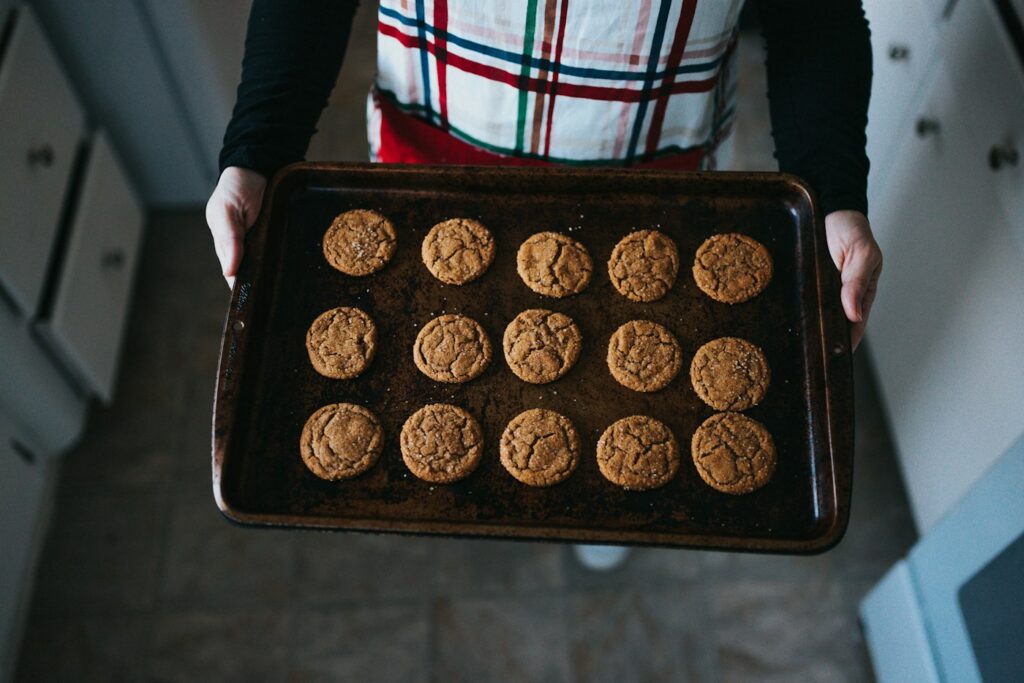
Photo: Nathan Dumlao on Unsplash, used under the Unsplash License. The baking scene illustrates the topic; no dimensions or oven compatibility are inferred from the photograph.