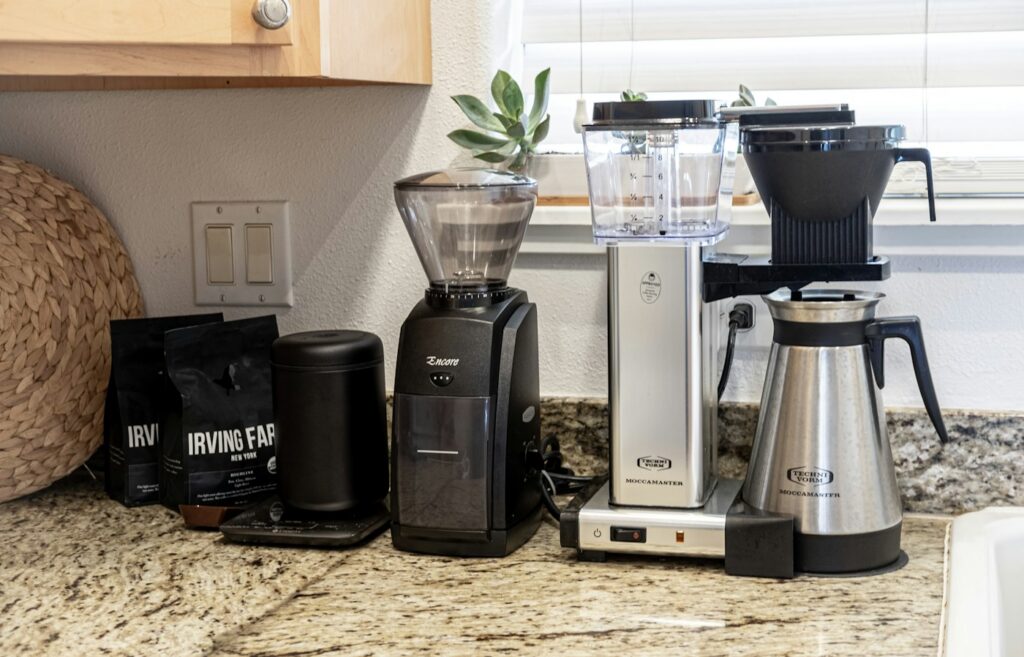
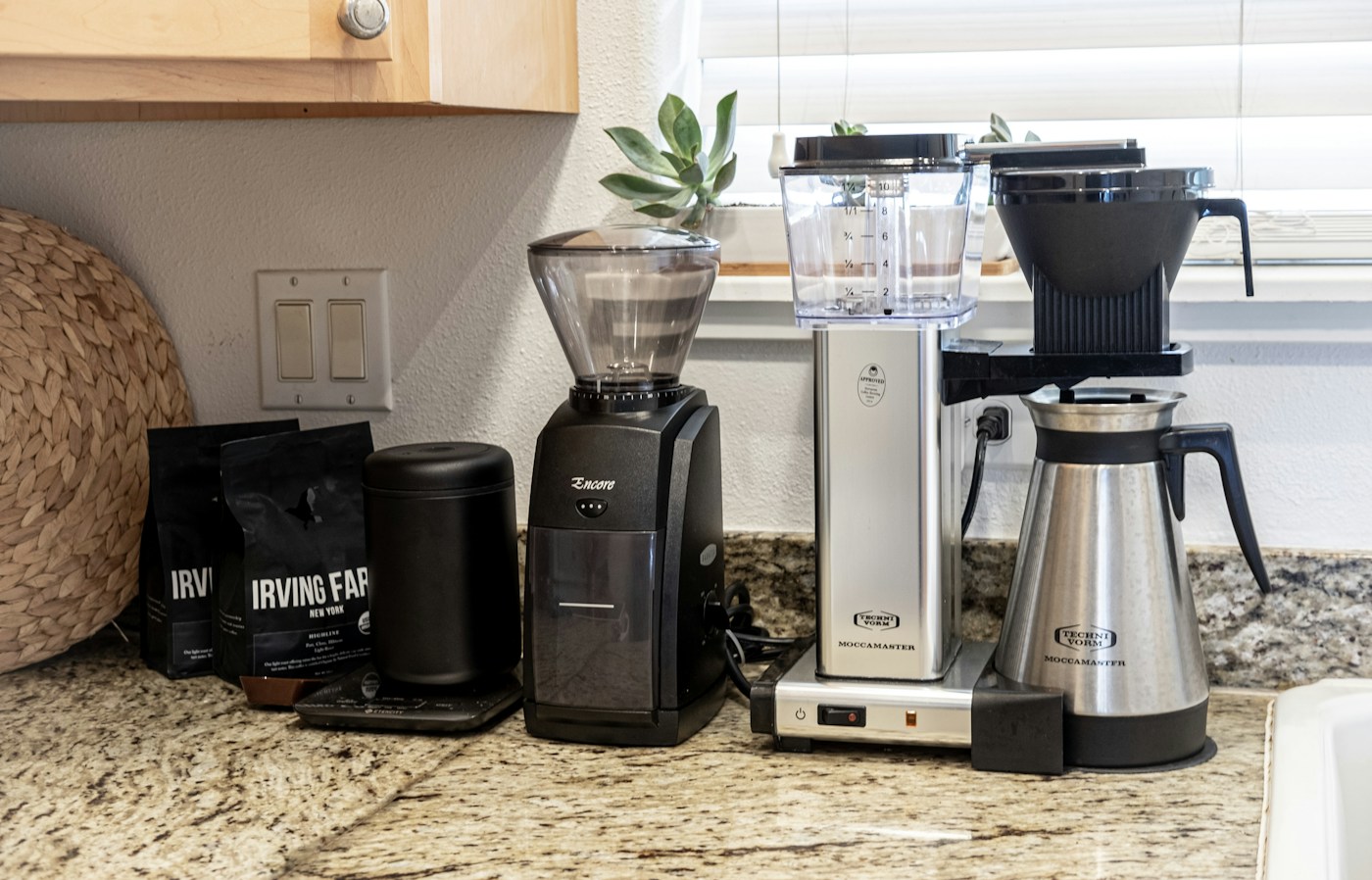
A useful coffee grinder buying guide starts with how you brew and how much coffee you prepare at a time. The number of grind settings is only one specification. Brewing range, dose control, the route into your brewer and available counter space can change which grinder fits your routine.
Some shopping links may earn us a commission at no extra cost to you.
Start with the brewing methods you actually use
List the brewer you own and any second method you genuinely expect to use. A grinder intended for filter coffee alone and one intended to make small espresso adjustments serve different shopping priorities. Read the maker’s description of the supported range rather than treating all numbered settings as equivalent.
The Baratza Encore ESP, ZCG495, provides a concrete example: its adjustment system assigns settings 1–20 to an espresso range and 21–40 to filter, French press or cold-brew grinding. Those are this model’s adjustment ranges, not universal recipes or equivalent settings on another grinder.
If you change brewing methods frequently, consider how you will record and restore your preferred setting. A setting number is a useful personal reference once you have established a recipe; it does not guarantee the same result with every coffee, brewer or dose.
Separate hopper capacity from the dose
The bean hopper holds beans before grinding. A grounds bin receives ground coffee afterward. Neither capacity automatically tells you how the grinder measures the amount for one preparation. Check whether the dosing method is manual, timed or weight-based, and what equipment the selected package includes.
Baratza lists the Encore ESP’s bean hopper at 300g and grounds bin at 120g, with manual dosing. The larger hopper figure therefore should not be read as the capacity of the grounds bin or as an automatically dispensed serving.
| Specification | Question for your routine |
|---|---|
| Brewing range | Does it cover the methods I plan to use? |
| Bean hopper | How much whole coffee can it hold? |
| Grounds bin | Will my intended batch fit after grinding? |
| Dosing method | How will I measure and stop each dose? |
| Receiving container | Does the output route suit my brewer or portafilter? |
Check the accessories at the receiving end
The Encore ESP listing includes a dosing cup for a 54mm portafilter and a 58mm adapter. It separately describes a single-dose hopper as an accessory. An accessory being compatible does not mean it is included with every package.
For any candidate, compare the supplied cup, bin, adapter and lid with the equipment you already own. Do not assume a photographed espresso machine or scale comes with the grinder. When comparing bundles, our useful-piece bundle guide helps separate required accessories from extras.
Measure the counter and usable clearance
The Encore ESP’s listed footprint and height are 13 × 15 × 34cm, expressed as width, depth and height. Use the exact candidate’s dimensions to mark a counter template. Then allow room for the power connection and the handling needed to remove the bin, lift the lid and refill the hopper.
A grinder that fits below a cabinet when closed may still need to be moved for refilling. Check the manufacturer’s cleaning instructions and whether removable parts can be reached in your intended position. Do not assume all burrs, bins or hoppers have the same washing instructions.
Compare the routine as well as the purchase
Choose the brewing range, batch size, dose handling and counter location first. Add only the accessories your setup requires, then compare the complete delivered total.
For the rest of your setup, our coffee-maker running-cost comparison explains how to separate immediate equipment cost from recurring coffee and supply costs. The shopping tools can help organize your own inputs.