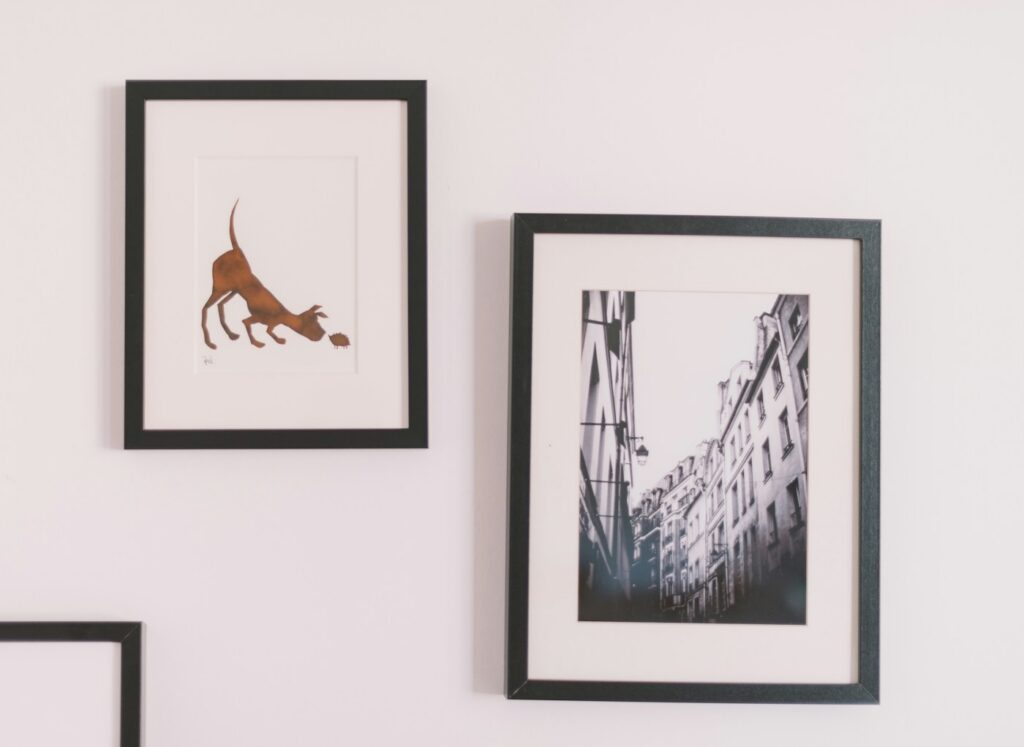
The size printed on a picture frame is usually the beginning of the fit check. A mat can hide part of the print, while the outer frame occupies more wall space than the picture itself. Compare the print, the visible opening and the outside dimensions as three separate measurements.
We may earn a commission from qualifying purchases at no extra cost to you.
Measure the print before choosing the frame
Write down the paper’s width and height, including any white border. Then note the area of the image you want to keep visible. A print with a signature near the edge needs a different framing decision from an image with generous empty margins.
Keep orientation in the note: portrait or landscape. If you are ordering a new print, check the lab’s crop preview before paying. A file with a different shape from the chosen paper may need cropping or borders; the frame cannot restore an edge already removed in printing.
Separate three kinds of size
| Dimension | What it describes | What to compare |
|---|---|---|
| Picture size | The print dimensions the frame is designed to hold in a stated configuration | Your actual paper size, with or without a mat |
| Mat opening | The window through which the image is visible | Important details near the edges of the image |
| Outside frame size | The total width and height on the wall or shelf | Available display space and spacing between frames |
A mat opening is normally smaller than the print it holds so its edge can overlap the paper. Do not order the paper to the opening size without checking the frame maker’s intended picture dimensions. The same frame can support different print sizes depending on whether you use the supplied mat.
Read the dimensions for the exact configuration
The IKEA RÖDALM frame labeled 8 by 10 inches illustrates why the measurements need separate lines. Its outside frame dimensions are 8¾ by 10¾ inches, while its listed mat opening is 4¾ by 6¾ inches. The nominal frame size and the visible window with the mat are different measurements.
Check the listing’s instructions for the picture size with and without the mat before choosing your print. If the fit text and a dimension table disagree, ask the seller or manufacturer to resolve the specific measurement rather than rounding it into a guaranteed fit.
Test the visible area with a paper window
Make a paper template of the proposed mat opening and place it over a copy or a preview of the image. Check faces, captions, dates and signatures at all four edges. This is especially useful when the original print has little spare margin.
For a hypothetical 5-by-7-inch print behind a centered 4¾-by-6¾-inch opening, the overlap would cover one-eighth of an inch on each edge. That calculation describes the geometry; it is not a tolerance guarantee for a particular manufactured frame. Use the exact product’s specifications and allow for how the print will be positioned.
Plan the wall using outside dimensions
Cut a second template for the outside frame. If you want a pair or a gallery wall, arrange those outer templates with the desired gaps. Counting only picture sizes makes the finished group wider than the plan once frame borders are added.
For example, three hypothetical frames each 10 inches wide with two 2-inch gaps occupy 34 inches in total. Start the layout from that complete width, then check nearby doors, shelves and switches. Frame depth also matters on a narrow ledge.
Check display options and included hardware
A frame pictured on a table may not include a stand in every size, and a wall display may need fixing devices sold separately. Read the exact size’s hanging or standing options and follow its mounting instructions for your wall. A similar-looking frame from the same series can have different hardware.
The RÖDALM example uses plastic front protection and includes a mat. Check the front material, backing, care instructions and included pieces for the model you buy. Do not assume a glossy photograph means the front is glass or that a styled print comes in the package.
Keep a five-line framing note
- Actual paper width and height.
- Image area and details that must stay visible.
- Intended picture size with or without a mat.
- Visible opening and total outside dimensions.
- Display method, supplied components and required fixing devices.
Compare frames only after those details are clear. A multipack is useful when each frame suits the prints and display you have planned. For more practical buying checks, visit Savings Guides.
Illustrative photo: Crew / Unsplash. The photograph does not show the exact products listed.