This article may contain affiliate links. GlitchNDealz may earn a commission from qualifying purchases.
Manufacturer package details reviewed October 22, 2026.
A pretend-food set’s piece count can include food sections, utensils and storage pieces. That makes two similar-looking counts hard to compare. Start with the activity you want to add to a play kitchen, then separate whole food items, detachable sections and accessories before choosing a box.
Count whole foods separately from cut sections
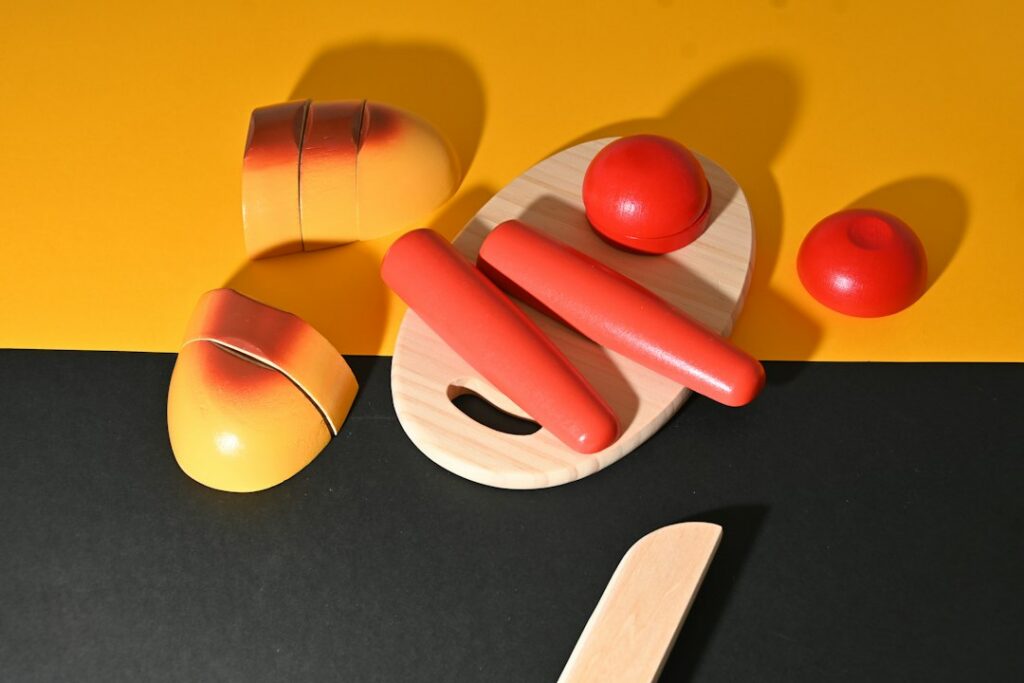
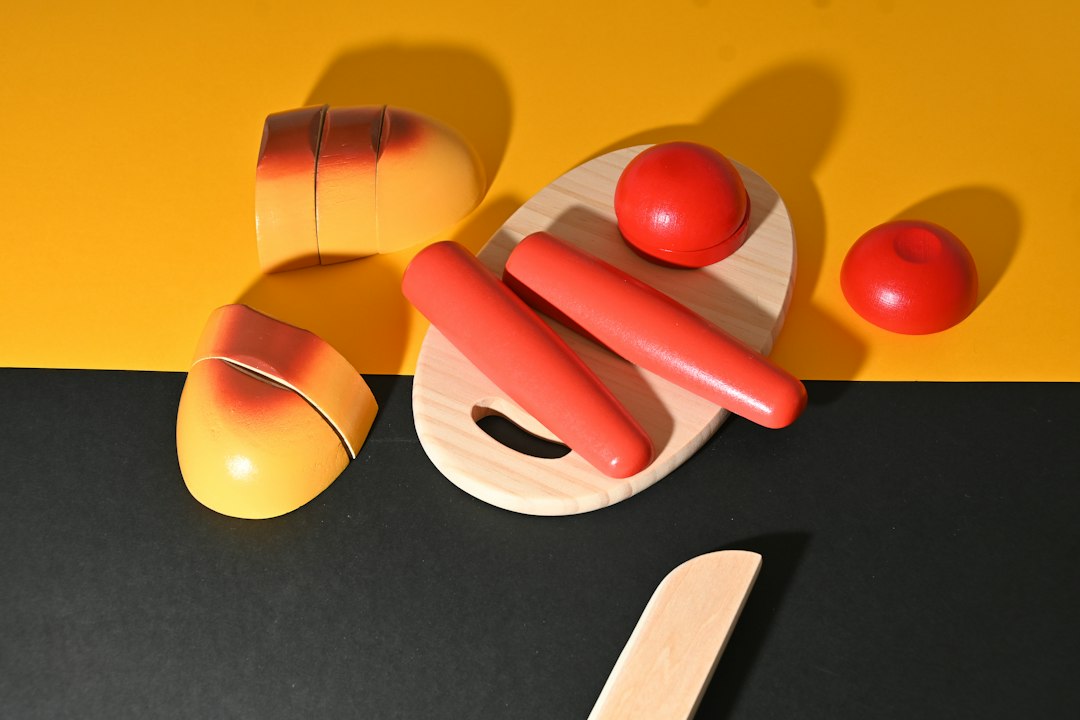
Melissa & Doug’s Cutting Food wooden play-food set has eight sliceable food items. The manufacturer’s play-food guide describes those foods as separating into 27 sections, with a cutting board and wooden knife.
Eight foods and 27 sections are two descriptions of the same food selection. They are not eight foods plus 27 additional whole foods. The board and knife add activities and handling pieces, while the detachable sections create more pieces to collect at cleanup.
Compare the play format you actually want
The Food Groups wooden play-food set instead organizes solid wooden pretend groceries into four wooden baskets. The maker names examples such as watermelon, milk, cheese, fish and eggs. Its basket-and-grocery format suits sorting, pretend shopping and putting groceries away; it should not be assumed to include the slicing features of Cutting Food.
| Question | Cutting-food format | Solid-grocery format |
|---|---|---|
| What is one food item? | A whole food assembled from its detachable sections | A solid pretend grocery piece |
| What adds to the handling count? | Separate slices, cutting board and knife | Groceries plus baskets or other supplied storage |
| What activity does the format support? | Pretend cutting, reassembling and serving | Sorting, shopping and stocking a pretend kitchen |
| What should you compare before buying? | Number of whole foods and included cutting accessories | Variety of groceries and whether baskets fit your storage space |
This is a comparison of package formats, not a live-sale roundup. Neither format is automatically better because its headline count is larger. Choose the one that adds a useful activity to the toys already at home.
Check what is included and what fits
A serving tray, play counter, menu or storage basket may be part of the advertised set, or it may simply appear in a styled photo. Read the current contents list for the exact model. Do not count pictured dishes, a play kitchen or another toy as included unless the package says so.
Measure a pretend shelf, basket or storage bin using the dimensions actually supplied for that item. A box’s shipping dimensions do not establish the size of each food piece or the assembled play station. If a needed measurement is missing, resolve it before choosing a tight storage location.
Use the age label for the exact set
The current Cutting Food page labels that product for ages three and up, while Food Groups is labeled for ages two and up. Those are different product recommendations. Do not carry one set’s age label over to another model, and follow each package’s warnings and care directions. These are pretend foods, not edible items.
Compare a complete play setup
List the food format, utensils and storage you want, then subtract what the recipient already owns from the buying list. Repeating a knife-and-board accessory may be less useful than adding a different pretend grocery activity. Extra detachable pieces also require a cleanup plan if you want to keep complete foods together.
For another type of kit, our art-set contents guide separates coloring tools from paper and extras. The board-game compatibility checklist helps identify purchases that need another product. Keep your complete gift list in the shopping comparison tools.