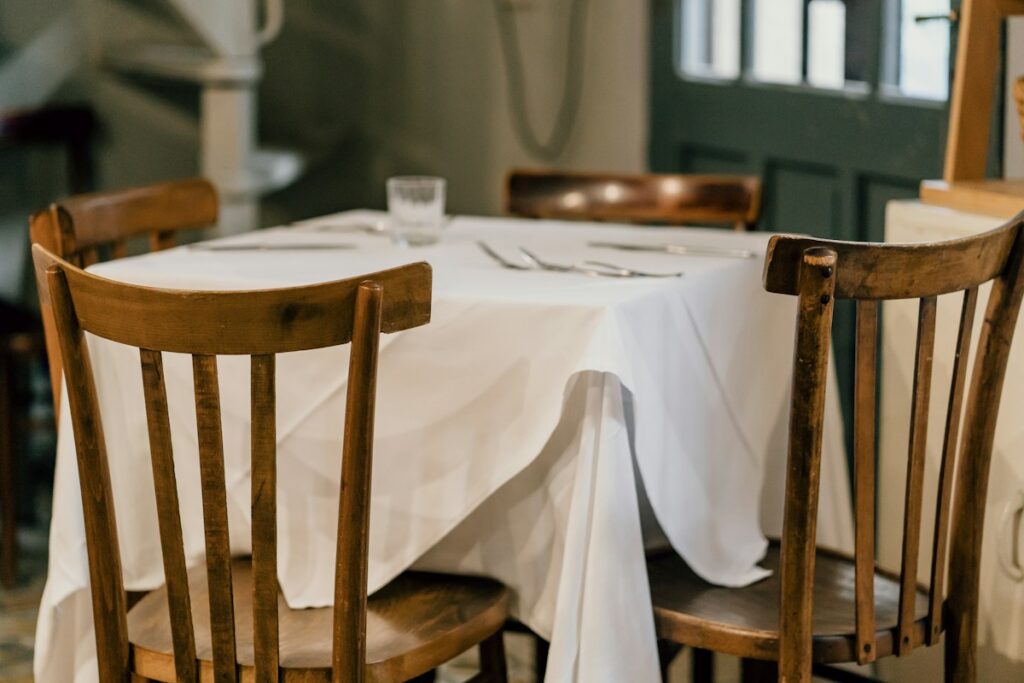
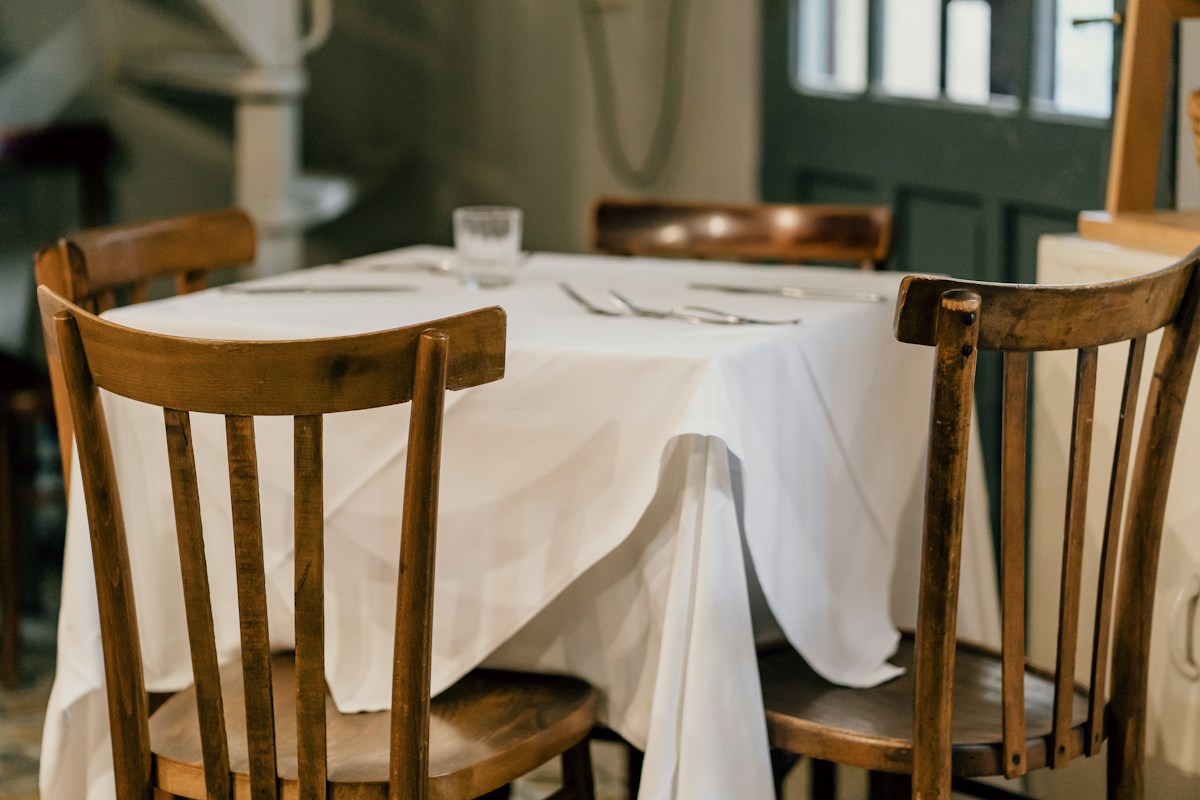
The right tablecloth size starts with the table you will actually use, including any extension leaves. Measure that setup, decide how far you want the fabric to hang over each edge and compare the result with the cloth’s finished dimensions. A seating-capacity label is less precise than those measurements.
Measure the intended table setup
For a rectangular table, record the length and width across the tabletop. For a round table, measure the diameter through the center. If you add leaves for a holiday meal, put them in before measuring rather than choosing a cloth for the everyday version of the table.
Check the tabletop shape too. Williams Sonoma’s tablecloth guidance recommends starting with shape and measurements, then choosing the overhang. A round cloth and a rectangular cloth with similar headline dimensions will not drape in the same way.
Add the drop on both sides
The drop is the fabric hanging beyond the tabletop. For an even drop on a rectangular table, add twice your chosen drop to the table length and twice that drop to the width. For a round table with a round cloth, add twice the drop to the table’s diameter.
These worked examples use invented table measurements and a chosen 8-inch drop to explain the calculation. They are not product dimensions or a universal recommendation for how far every cloth should hang.
| Illustrative table | Calculation | Target cloth measurement |
|---|---|---|
| Rectangular: 72 by 40 inches | Add 16 inches to each dimension | 88 by 56 inches |
| Square: 40 by 40 inches | Add 16 inches to each dimension | 56 by 56 inches |
| Round: 48-inch diameter | Add 16 inches to the diameter | 64-inch diameter |
A retailer may offer sizes on either side of your calculated target. Compare the actual drop each option would create before choosing. For example, a 90-inch cloth centered on a 72-inch-long table creates a 9-inch drop at each end: subtract the table length from the cloth length, then divide by two.
Check both directions
A rectangular cloth can have a longer drop at its ends than along its sides. Work out the two directions separately. Do not choose by length alone and discover that the cloth barely covers the table’s width.
For an oval table, look for the maker’s intended table shape and sizing information. Its rounded corners affect the drape, so a rectangular cloth of similar length and width is a different presentation. If you already own a cloth that sits well, measure it and note how it works on that table.
Try the drop with the chairs in place
Use an existing cloth or a strip of paper to visualize the overhang before ordering. Pull out the chairs and check where the edge falls when someone sits down. Consider the table’s legs, any nearby serving trolley and how people will move around the meal.
The chosen drop is a practical and visual preference. A neat everyday setting and a longer decorative drape can call for different sizes. There is no need to buy a much larger cloth simply because its listing suggests a greater guest count.
Read care and fabric details before comparing price
Look at the specific cloth’s fiber content, washing instructions and finished dimensions. Check any stated shrinkage information rather than applying a generic allowance to every cotton or linen product. If you plan to wash it before the event, allow enough time for the care routine the manufacturer specifies.
Keep your table measurements, desired side and end drops, and the cloth’s exact dimensions together in a buying note. That makes it easier to compare another pattern or brand later. Browse our savings guides for more practical ways to compare household purchases.
Disclosure: GlitchNDealz may earn a commission from qualifying purchases through affiliate links, at no additional cost to you.